
Guide
Zhang Wenchang, a second-generation disciple of Xu Beihong, elaborates on the core spirit of the “galloping horse” — continuous self-renewal, striving upward, and racing forward. He emphasizes that this spirit transcends art itself to become a symbol of cultural confidence and an era defined by progress. He is also dedicated to advancing its contemporary relevance through international exchange, youth aesthetic education, and cross-sector innovation.
This year marks the Year of the Horse in the lunar calendar. As Xu Beihong’s most iconic artistic motif, the galloping horse has re-entered the public sphere with the arrival of spring, evoking deep resonance with both classical art and the enduring spirit of the nation. Zhang Wenchang, Director of the Shenzhen Xu Beihong Culture and Art Center, recently shared in an exclusive interview with China News Service that no matter how the times change, the spirit of the galloping horse — one of relentless self-renewal and upward striving — remains a legacy worth remembering, passing down, and reinterpreting for a new era.
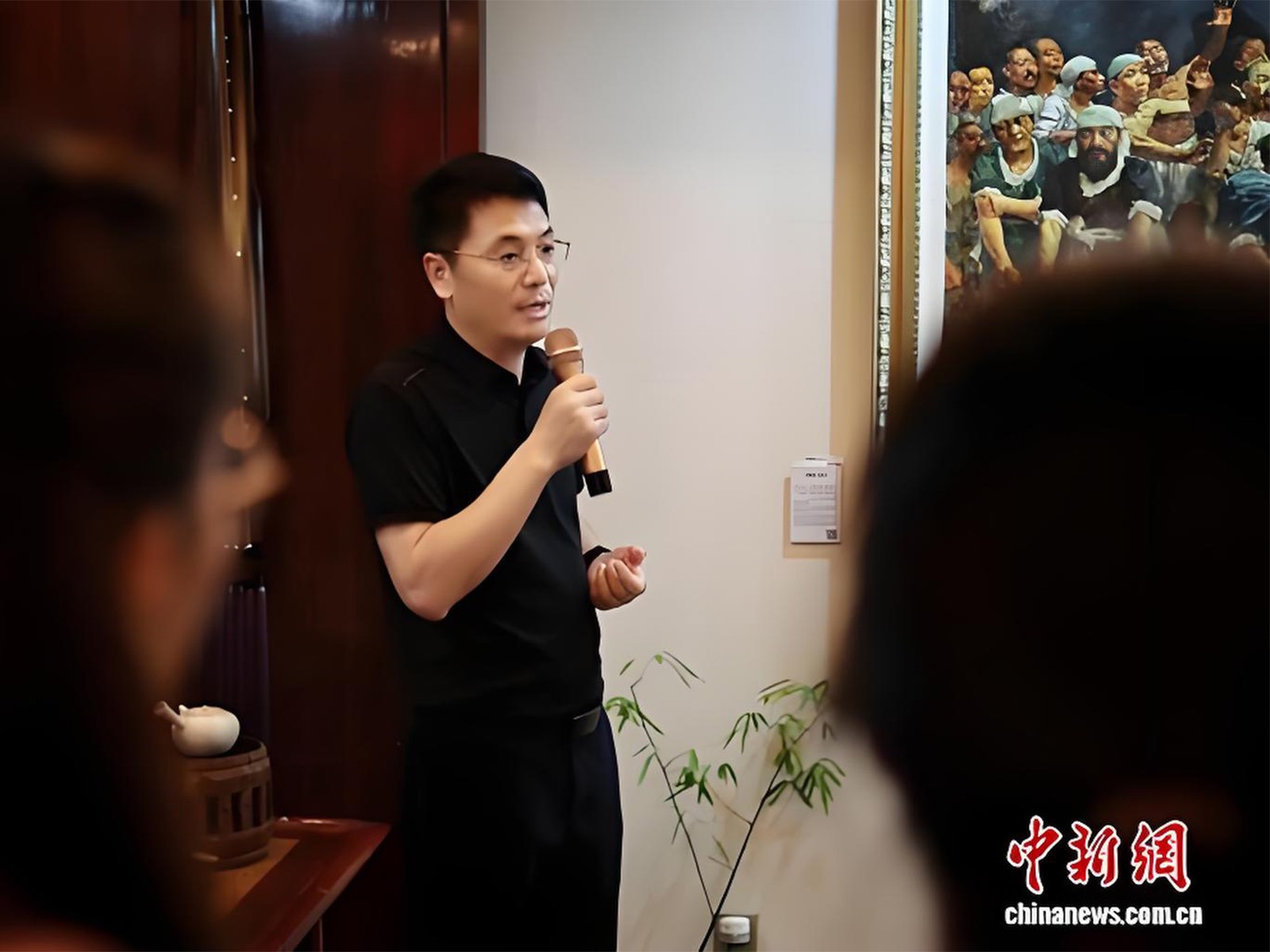
Photo: Zhang Wenchang shares stories behind Xu Beihong’s works with young visitors from Hong Kong and Macao at the Shenzhen Xu Beihong Culture and Art Center.
Zhang Wenchang studied under Dai Ze, making him a second-generation disciple of Xu Beihong. He explains that Xu Beihong’s horses combine the rigorous structure of Western figurative art with the expressive spirit of Chinese ink painting—but what resonates most is the “soaring vitality” within them. This vitality, he says, embodies the profound hope for national rejuvenation held by intellectuals during a time of crisis, and reflects an indomitable, race-forward national character. “This spirit remains vibrantly alive today,” Zhang notes. “It has long transcended the realm of art to become a symbol of cultural confidence and forward-striving resolve.”
In Zhang’s view, the Year of the Horse is not merely another turn of the zodiac, but an opportunity to reinterpret the spirit of the galloping horse for a new era. Ahead of the Spring Festival, the Shenzhen Xu Beihong Culture and Art Center, together with Xu Beihong’s eldest grandson Xu Xiaoyang and the Shan Shui Danqing International Art Center, released a set of Xu Beihong horse-themed commemorative postage stamps issued by five national postal services. Representatives from multiple embassies in China attended the launch. “This is both a tribute to Mr. Xu’s artistic legacy and an effort to carry his galloping horses across borders—sharing the strength of Chinese culture with the world,” Zhang says.
The Center has also organized a range of initiatives that bridge professional art and public engagement, aiming to bring the spirit of the galloping horse deeper into people’s consciousness. This May, it will host *Ten Thousand Horses Galloping — A National Exhibition of 100 Artists Paying Tribute to Xu Beihong*, inviting 100 works nationwide on the theme of galloping horses. The exhibition honors the master while showcasing contemporary artists’ reinterpretations of this classic subject. In parallel, the Center will launch the Shenzhen leg of the *Xu Beihong Cup International Youth and Children’s Art Competition*, themed around “ten thousand horses galloping,” encouraging young people to express their understanding of striving spirit and patriotic devotion through art—seeds of aesthetic education sown in a new generation.
“The Center will further strengthen the international dissemination of Chinese culture. In addition to continuing global touring exhibitions and academic dialogues, we will also explore cross-disciplinary collaborations between Xu Beihong’s art and fields such as technology and design, allowing classical art to enter the international arena in more contemporary forms,” Zhang said.
Speaking on the contemporary significance of “ten thousand horses galloping,” Zhang noted that the horses in Mr. Xu’s works represent the power to break free from constraints, to press forward courageously, and to strive unceasingly. Today, the image of ten thousand horses in full gallop carries even richer meaning for the times—it can be seen in technological breakthroughs, in the vibrant flourishing of cultural expression, in the pursuits of a new generation chasing their dreams, and above all, in a society striving upward and racing forward. This vitality that transcends limitations, he observed, is precisely what our era calls for.
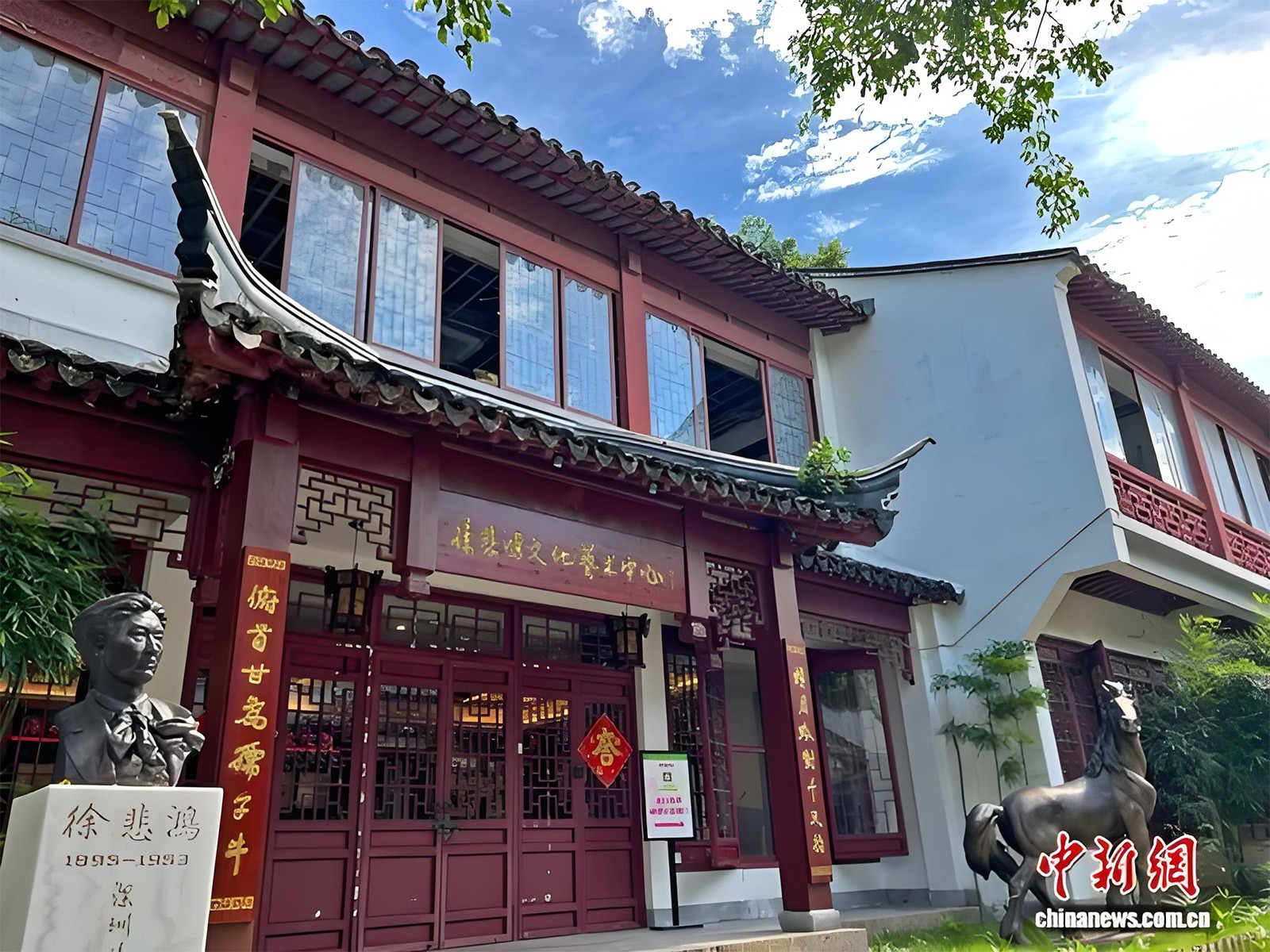
Photo: Shenzhen Xu Beihong Culture and Art Center
Source: China News Service
Editor: Liu Yanghe

Xu Beihong’s life was deeply intertwined with the fate and rise of his nation. He embodied great patriotism, selfless dedication, relentless artistic innovation, and a keen eye for nurturing talent. His legacy reflects an unwavering spirit of independence, moral integrity, and enduring inspiration. (Engraved in the central hall of the Beijing Xu Beihong Memorial Hall)
Xu Beihong was a leading Chinese artist and art educator, known as the “Father of Modern Chinese Painting.” He was the first president of the Central Academy of Fine Arts and chairman of the China Artists Association. His works, including Tian Heng and His Five Hundred Followers 《田横五百士》, Waiting for the Deliverer 《徯我后》, and The Foolish Old Man Removes the Mountains 《愚公移山》, laid the foundation for modern Chinese oil painting with their unique blend of Chinese style and Western technique.
He believed art should reflect real life and combined Chinese traditions with Western methods to create a new, influential style. Xu Beihong not only produced many masterpieces but also trained a generation of outstanding artists, shaping China’s modern art education system. His efforts promoted Chinese art worldwide, leaving a lasting legacy.